Dal Tadka
2026 was my year of the dal! It's been a long-term project of mine to become more confident tackling Asian-style flavours and this year I was rewarded with this recipe, which tastes like the dal I used to get from our local Indian restaurant (before it closed down... 😭). I'd long been duped into thinking authentic-tasting dal was too difficult, too elusive to pull off. I think one-too-many white-person authored red-lentil dals from the high-carb low-fat vegan 2010s can be blamed for that. This is inevitably another white-person authored dal that the internet probably doesn't need. But maybe you need someone to say you can make it too, and this recipe will do just that.
What I've learnt during my year of the dal, is this: the "tadka" (spices tempered in fat) is ESSENTIAL. It adds a crucial layer of flavour, richness and umami deliciousness. Real ghee is also what makes it taste like "how you remember it", so bear that in mind. Dairy-free ghee's are available at some health food shops, but they are a little coconutty. The most delicious cultured dairy-free butter is also a good alternative – but those generally have a low smoke point, so adjust your pan's heat when/as appropriate. Although it's a recipe with a long ingredient list, read it through a couple of times and you'll find the method is rather straightforward. There are multiple points where you can pause and do something else for a bit too, if you're prone to recipe overwhelm... or just like to break up your cooking-time.
I've genuinely eaten this recipe over 100 times this year and I'm still not sick of it. It's also a great one to freeze portions of, for later use.
Some other notes:
- Start this recipe the night before making, giving time for the lentils to soak. At a pinch they can soak for 6 hours.
- Have all the ingredients portioned and prepared (chopped, measured etc.) before you start cooking, for a less stressful experience.
- As written, this Dal Tadka is MILD.
- Low FODMAP – considering the quantity of lentils in this recipe, this dish is not low FODMAP. However, a small serving size with a few swaps may be tolerable for some FODMAP sensitive eaters. I have found it to be a dish which I tolerate very well and a great way to eat more GOS containing foods. Swapping the onion for the greens of spring onions and using garlic-infused extra-virgin olive oil will lower the total FODMAP load.
THIS RECIPE WAS ADAPTED FROM SWASTHI SHREEKANTH'S DAL TADKA RECIPE PUBLISHED ON SWASTHI'S RECIPES, July 20th, 2024.
INGREDIENTS
- 60g (1/4 cup) moong dal
- 30g (1/8th cup) red split lentils
- 2 tbsp (25g) yellow split peas OR chana dal
- generous drizzle garlic-infused extra-virgin olive oil (optional)
- knob dairy-free ghee (optional)
- 1/2 tsp cumin seeds
- 1 brown onion, very finely chopped
- 1+ green chilli, deseeded & very finely chopped
- 1 large thumb-piece ginger, peeled & very finely chopped
- 1/4 tsp ground turmeric
- 1/3 tsp Kashmiri chilli powder OR pinch dried chilli flakes
- 1/2 tsp tsp garam masala
- 2 tomatoes, finely diced (1 cup) OR 1/2 x 400g can chopped tomatoes
- small handful coriander stalks, finely chopped (optional)
- 1 tsp salt
- 1/2 tsp ground fenugreek seeds (also called fenugreek powder) OR 1/4 tsp fenugreek seeds
Tadka
- 2 tbsp fat of choice (dairy-free butter, dairy-free ghee, light-flavoured vegetable oil)
- 1 tsp cumin seeds
- 1/4 tsp black mustard seeds
- pinch Kashmiri chilli powder OR pinch dried chilli flakes
- 2 small sprigs fresh OR frozen curry leaves (double if you must use dried)
Serving suggestions: buttered-jasmine rice (or long-grain rice of choice), natural coconut yoghurt, lime pickle, squeeze of lemon juice, chopped spring onions, coriander leaves, flaked almonds, salted cucumber slices (peeled and sliced cucumbers, generously sprinkled with salt & left to sit for 1 hour before serving).
METHOD
- Place the three types of dried lentils in a bowl, cover with water (they will expand a bit, so account for that) and leave to soak overnight (or 6 hours as a pinch).
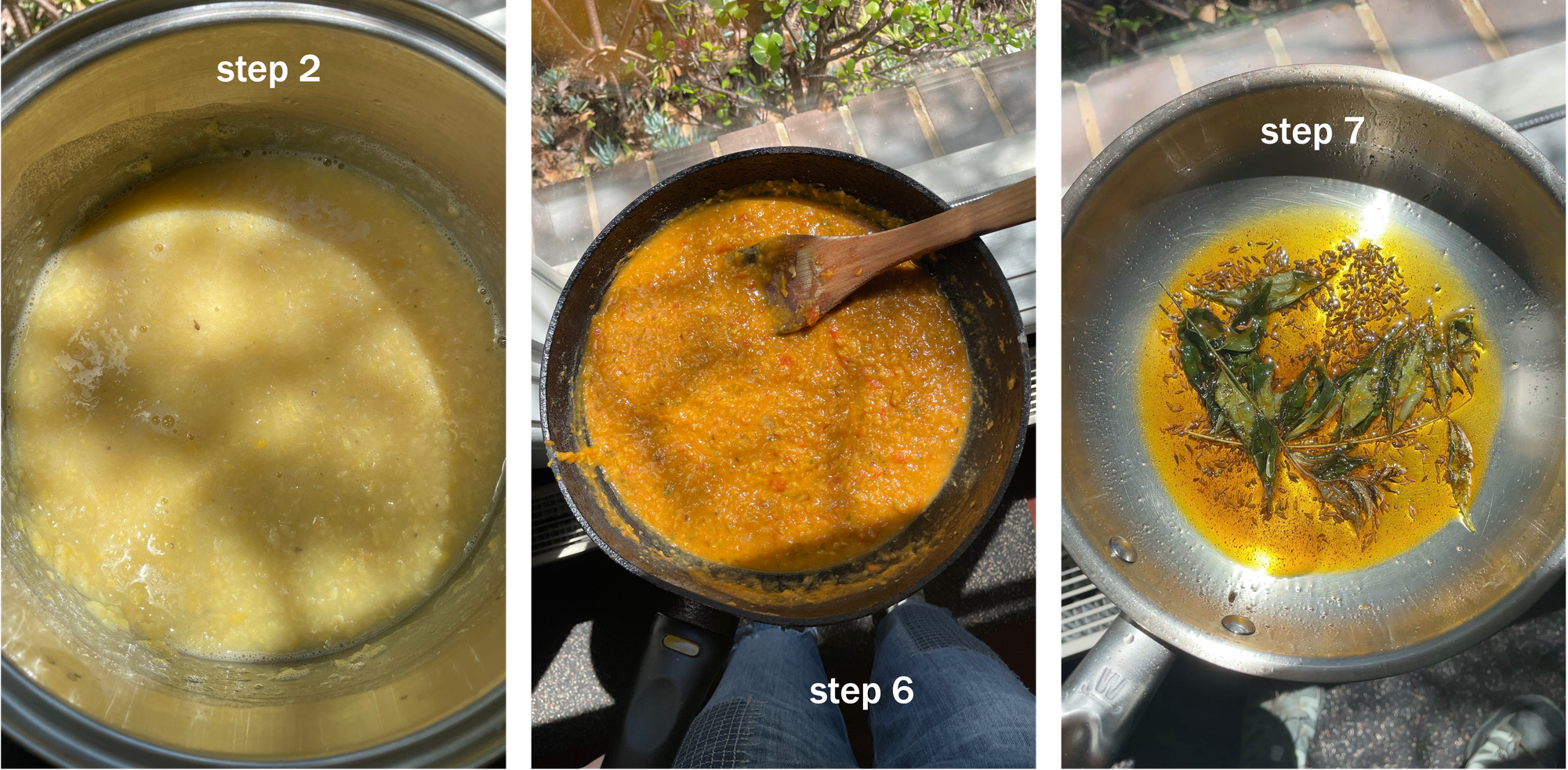
- About an hour before eating, drain and rinse the lentils well (toss out any discoloured ones, if desired) and place in a medium saucepan with 750ml (3 cups) of water. Bring to the boil, then simmer for 30 minutes – skimming off the froth a couple of times... if you can be bothered. The resulting texture should be like a loose, slightly textured puree (see image below).
- Meanwhile, to a medium frypan add a generous drizzle of garlic-infused extra-virgin olive oil and a knob of dairy-free ghee (if using, otherwise a few tbsp of light-flavoured vegetable oil will suffice). Once melted, add the cumin seeds and swirl around until they begin to splutter. Add the chopped onion, chilli and ginger and sauté until the onions are soft, fragrant and slightly golden.
- Reduce the heat to low and add the turmeric, chilli powder and garam masala – stirring briefly to combine.
- Add the tomatoes, coriander stalks (if using) and salt, stir everything together and sauté over medium heat until the tomatoes have broken down and the mixture looks like a chunky puree.
- Add the cooked lentils to the tomato mixture (in either vessel, is fine). Stir to combine and let simmer over medium heat for 5-7 minutes. Add the fenugreek seeds, stir to combine. I like to blend approx. half of the mixture with a stick blender for my preferred texture (see image below), although this is not compulsory. At this point, also add more water to reach your preferred dal consistency, then taste and add more salt, if required.
- Make the Tadka just before serving. In a small fry-pan, heat the fat of your choosing. Once warm, add the cumin and mustard seeds and let them sizzle and splutter over low heat until fragrant (do not burn, it will only take around 30 seconds max). Take the pan off the heat, add the chilli powder and curry leaves and swirl around until the curry leaves are slightly crispy and fragrant – it will splutter (see image below). Pour the tadka immediately over the dal.
- Serve with the serving suggestions (the more the merrier) and enjoy!